




























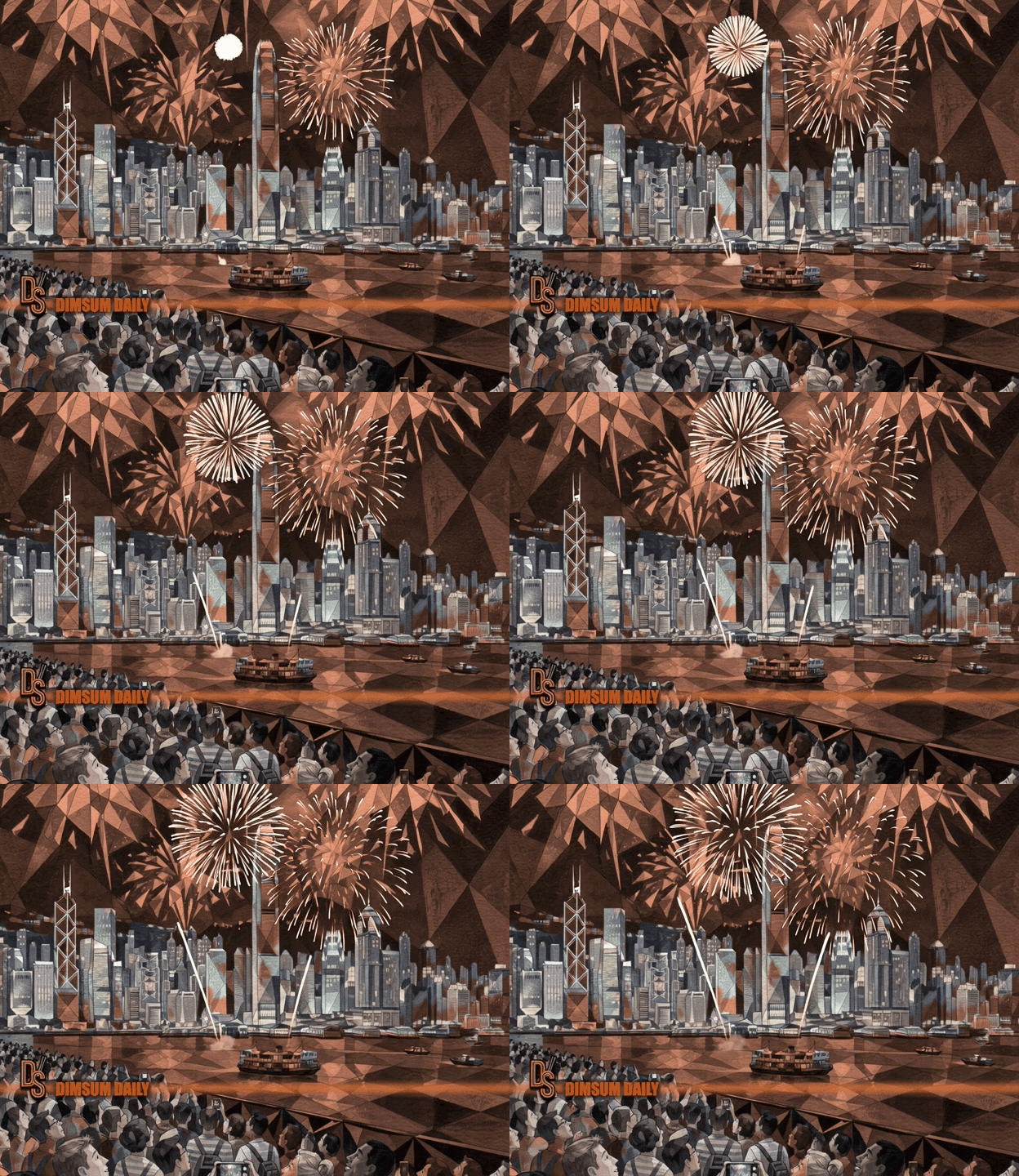
3rd October 2026 – (Hong Kong) Stand near the Lok Ma Chau Spur Line Control Point on a holiday morning and the scene tells you a lot. The crowd is large, but it moves. Families pull suitcases toward the MTR. Tour guides hold up flags. Officers wave travellers through e-Channels. Across the harbour, staff guide lantern-watchers to new queuing areas on the football pitches of Victoria Park. It is busy, but nobody is panicking. The numbers explain why.
On the first day of the National Day Golden Week, more than 590,000 people entered Hong Kong and about 490,000 left. That leaves a net inflow of around 100,000. Mainland arrivals passed 277,000, the highest single-day figure since the border fully reopened in 2023. Secretary for Culture, Sports and Tourism Rosanna Law said the total was higher than last year’s and also above the 2018 peak. By 9pm on the second day, another 227,000 mainland visitors had arrived. That brings the two-day total to about half a million. The government expects 1.29 million mainland visitors and more than 1,180 tour groups over the week. The Immigration Department expects 7.44 million crossings in total.
Spending has followed the crowds. Hotel occupancy has passed 90% and room rates are up about 10%. Restaurants took about HK$320 million on National Day, also up 10% on last year. Seven in ten members of the Hong Kong Retail Management Association said business rose on the first day. Caterers also report more visitors from distant provinces such as Heilongjiang, Gansu, Xinjiang and Yunnan. Some of them stay for a week. Guests who come from far away tend to stay longer and spend more.
Hong Kong recorded 36.67 million visitor arrivals in the first eight months of 2026. That is 11% more than in the same period last year. August alone brought 5.46 million, the busiest month since the pandemic. To reach the full-year target of 53.8 million, the city needs about 4.3 million arrivals a month until December. It has recently been beating that pace comfortably.
Singapore welcomed 11.43 million visitors in the first eight months of the year, 1.7% fewer than a year earlier. Overnight visitors fell 3.2% to 8.37 million. The average stay shrank 2.8% to 3.43 days. August arrivals were flat. Total arrivals for 2025, at 16.9 million, were still below the 19.1 million of 2019. Singapore has so far reached about 67% of the lower end of its target for 2026.
Hong Kong’s total includes many same-day visitors from just across the boundary. Singapore has no neighbour of that size, so comparing the raw totals flatters Hong Kong. Singapore is still a formidable rival. Its tourism receipts hit a record S$32.8 billion in 2025, and mainland arrivals rose 9.4% in August. But the direction of travel is clear. One city is growing at double digits. The other is slipping slightly.
Other measures point the same way. Hong Kong International Airport has been named Asia’s leading airport at the World Travel Awards for the fourth year running, ahead of Changi, which held the title before the pandemic. Its second terminal opened in May as part of a US$14.5 billion expansion. The Hong Kong General Chamber of Commerce’s Asian Cities Internationality Index puts Hong Kong first with 74.6 points against Singapore’s 72.6. That lead has widened from 0.2 points to two.
Much of this comes from deliberate policy. Kai Tak Sports Park has hosted more than 170 sessions of major events, drawing over 2.6 million spectators. The 2026 Policy Address and the First Five-Year Plan add a film-and-tourism programme, a possible all-weather arena at Victoria Park and new yacht berths. Halal restaurant funding has also been extended to 2027. In the first half of the year, more than 20% of overseas visitors travelled on to the Mainland via Hong Kong. This gateway role is one Singapore cannot easily copy.
Law has said travellers now want experiences more than shopping bags, and the calendar reflects that. The International Lantern Spectacular is followed by Hong Kong’s first Halloween month, a festival rarely celebrated elsewhere in Asia. Crowd management has been just as careful. The Tourism Board publishes live waiting times for major attractions, and Po Pin Chau is testing a booking system. Commissioner for Tourism Ann Chan inspected attractions in person before the rush.
Hong Kong’s tourism still has weak spots. High airfares and fuel surcharges are holding back short-haul travel from Southeast Asia. Miramar Group’s Alan Chan Chung-yee told reporters that overnight visitors fell 4% in the first seven months while day-trippers rose 28%. He expects the new Huanggang port, due to open as early as 12th October, to add more same-day visitors. Reporters also found young visitors spending the night in Tsim Sha Tsui’s 24-hour McDonald’s restaurants and internet cafés. Citi warns that some holiday demand was used up early, around Mid-Autumn.
The government’s focus on high-value overnight visitors is therefore the right one. Industry ideas deserve a fair hearing, such as more varied routes in Sai Kung and the New Territories, and multiple-entry permits for Shenzhen residents. Events also need to be spread across all 18 districts. Taken together, the evidence shows a city that planned for a recovery and is now getting one. Hong Kong’s growth is steady, its rivals are slowing and its policies are aimed at the right gaps. Asia’s top position in tourism is Hong Kong’s to keep, as long as it keeps working for it.